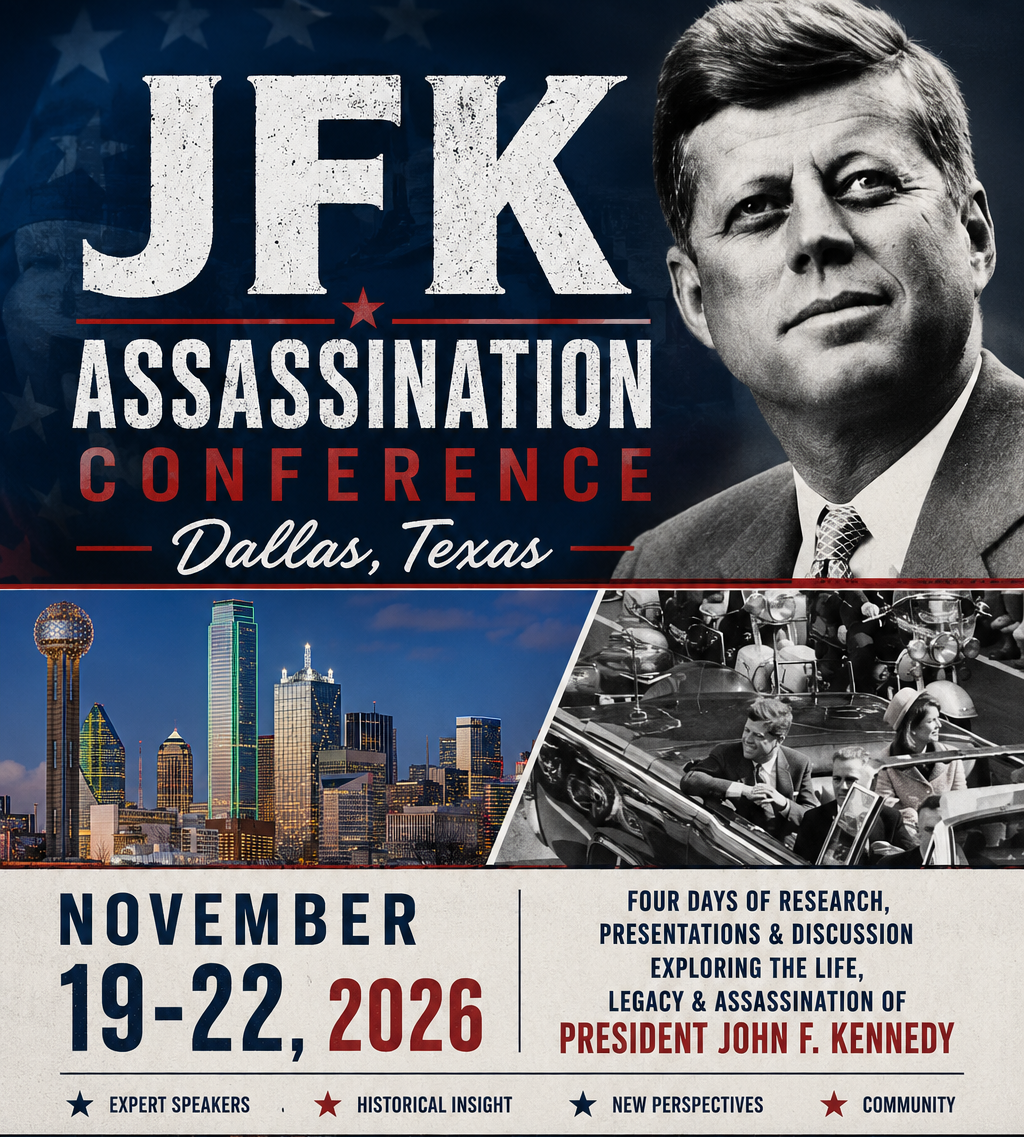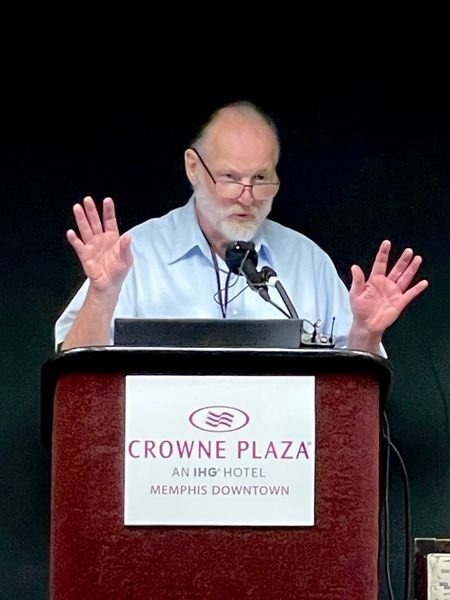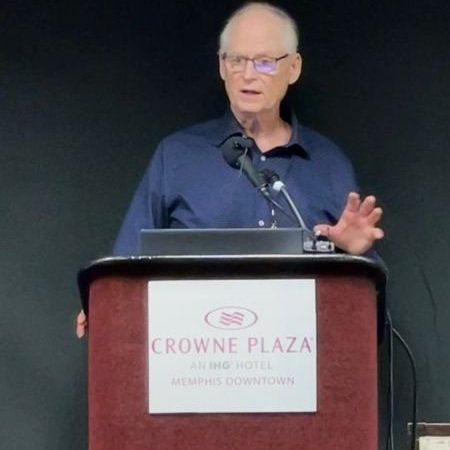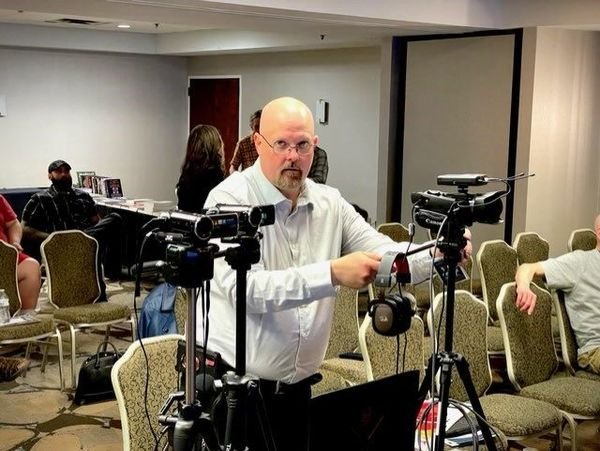
Please consider joining us for our important annual event on November 19-22 at the DoubleTree at Market Center in Dallas, The |JFK Assassination: Why It Still Matters. Pursuing Justice and Historical Truths. You can find all the important information, including registration, hotel info and our LATEST SCHEDULE by scrolling to the bottom of this page.
Update: One day ($50) and one session passes ($25) will be available at the door for this conference. Student passes will also be available for one day ($20) and one session ($10).
William Harvey: What the declassified documents say about the CIA ‘s real “James Bond”
William Harvey was a significant, yet controversial officer for the CIA during the height of the Cold War before his death in 1976. He headed up the agency’s super-secret ZR Rifle program, euphemistically referred to as “Executive Action,” which targeted foreign leaders for assassination, Fidel Castro being at the top of the list. He was a central figure from 1961 to 1963 in the sabotage and terror campaign against Castro’s Cuba known as Operation Mongoose. Fellow CIA officer Ed Lansdale dubbed him “America’s James Bond.” Although the story that has been circulated that Harvey showed up at the White House packing a pistol is unsubstantiated, his personnel file lists only one thing under hobbies: “Guns.” Early on in his CIA career Harvey apparently demonstrated some special qualities that caught the attention of his superiors. A memo declassified in 2017 involved a commendation from then Assistant Director for Special Operations Richard Helms that complimented Harvey for his ability to “say no and make it sound like maybe yes without even saying maybe.” One can surmise from this that Helms was suggesting that he was good at doublespeak, a valuable skill in the world of intelligence.
Dangerous and Rogue
Harvey has long been considered one of those most likely characters inside the CIA to have participated in the Kennedy murder by many researchers, and his declassified (also in 2017) file does reveal a man with the perfect profile of someone capable of participating in and carrying out an assassination plot. He’s described in it as someone willing to be involved in “highly sensitive” and “extremely political” operations. He comes across as a dangerous, secretive individual, willing to go rogue. He “moved into positions stronger than his superior officers,” was also “tenacious and aggressive in the pursuit of his point of view.” He “had at his disposal a coterie of officers” loyal to him, referred to as “Harvey men.”
A CIA internal review of Operation Mongoose and the Cuban Task Force written in 1975 cataloged multiple issues and controversies associated with Harvey. It stated, “because of his personality traits, his personal relations, particularly with General Lansdale and the attorney general, were never very pleasant to begin with, and deteriorated steadily.”
A clear example of all this occurred at the height of the Cuban Missile Crisis when, in a clear act of insubordination, Harvey didn’t bother to wait for the invasion orders that never came from the Kennedys and sent in his team of Cuban exiles to create havoc in Castro’s Cuba. Lansdale, who oversaw Operation Mongoose, confronted Harvey about this, accusing him of acting without Lansdale’s knowledge. As a result of this, Harvey would “earn another black mark as not fully being under control.” When The Special Operations Group, who oversaw covert operations, questioned Harvey about these matters, they came away dissatisfied, believing Harvey was “not forthcoming.” According to this review, after this meeting, “it was clear to McCone (CIA director) that Harvey had broken his lance and would have to be replaced.”
Harvey’s frustrations with Cuba policy.
On his way out the door, in November of 1962, Harvey would write a memorandum to the Director of the CIA, also declassified in 2017, in regards to continuing operations against Castro’s Cuba. The memorandum was blunt about the agency’s chances of toppling the regime. He stated that any attempt at fomenting revolution would be destroyed in a matter of hours or days “unless supported by a major military commitment." Harvey was openly critical of the Kennedy administration for giving “assurances of no invasion” that would, in effect “constitute giving Castro and his regime a certain degree of sanctuary.” He also directly accused JFK, whom he referred to as “Higher Authority” of being duplicitous for pressuring the CIA to exert “maximum effort” to overthrow Castro and yet be unwilling to do what was necessary to succeed- commit military troops. Harvey would even go so far to suggest in this memorandum without any military commitment that the “operational Mongoose mechanism” should be abolished.
The Hunt "confession"
In 2012, the son of Watergate burglar and former CIA agent E. Howard Hunt, Saint John Hunt, would write a book, Bond of Secrecy, that recounts an end-of-life confession by his father that suggested a plot in Dallas that included, among others, William Harvey. Hunt suggested that he was a “benchwarmer” in the assassination because he refused to take on any significant role that an “alcoholic psycho” like Harvey was involved in.
Harvey and John Roselli
An internal memo received via FOIA request to the CIA by this author in 2018 that described the relationship between the CIA and mobster John Roselli, gives us more insight into Harvey. It goes into detail about how Robert Maheu, an agency go-between, contacted Roselli to recruit him to be a liaison between the Mafia and the CIA. Among other things, it also demonstrated the agency’s amoral behavior and attitude in the pursuit of their goals. They indicated a willingness to partake in “gangster-type actions” as they went after political leaders like Castro, who they brazenly viewed as mere “targets.” The document gives a chronological account of their relationship with Roselli, even reporting that, ironically, the famous mobster was eventually jailed in 1968 for cheating people out of “$400,000 in a rigged gin rummy game.”
Roselli has long been a mysterious character regarding the JFK assassination. Some put him on the grassy knoll as one of the shooters. Tosh Plumlee, a pilot who flew operations for the CIA and other agencies, suggested that Roselli was in Dealey Plaza as part of an abort team to stop the assassination. Roselli ended up dead, cut up in an oil drum found floating in the Gulf of Mexico before he was able to testify before the House Select Committee in 1976.
However, what may be the most telling information in the Roselli document is its reference to Harvey. The agency seemed to deliver a complete account about their connection to Roselli until it came time to talk about his relationship with Harvey. It states: “In May 1962, Mr. William Harvey took over as Case Officer, and it is not known by this office whether Roselli was used operationally from that point on.” Did the agency truly not know what Harvey and Roselli were up to after May 1962, or were they unwilling to put it on paper? Either way, it doesn’t look good.
“...kill the person, bury the body, and tell no one.”
After the Cuban debacle in June of 1963, Harvey was assigned (exiled?) to be Station Chief in Rome. Having been given the task of setting up an “executive action capability” within the CIA by Richard Bissell in 1961, it seems possible that Harvey could have recruited foreign assassins (such as Corsican mobsters) to be part of an assassination plot.
In an interview with the House Select Committee in 1976 shortly before his death, Harvey could be described as evasive, vague, and at times conveniently experiencing a loss of memory. He tried to imply that the executive action program may have originated from the White House. Of particular note was his attempt to downplay the significance of the mysterious asset code named QJWIN. Some researchers have long suspected this figure as a potential foreign assassin involved in JFK’s murder. Harvey claimed he was uncertain as to QJWIN’s potential involvement in the assassination of Lumumba and would claim that “…QJWIN was never involved in any way in the Castro operation -- nor, for example, ever in the United States…” This claim seems dubious because in his own bills there are records of a plane trip ticket from Miami to Chicago charged to QJWIN. When pressed by interviewers about recruiting potential assassins as assets, he downplayed the possibility and brashly stated “…the one sure way to do it [assassinate someone], was to simply appoint a single senior officer to do everything: to run the operation, kill the person, bury the body, and tell no one.” It’s hard to say if Harvey is being deceptive in this statement or if there are deeper implications in his boldness.
Harvey’s foreign operation.
In truth, Harvey was in a perfect position to participate in a plot against JFK. He had been a part of Operation Mongoose, which allowed him to develop a loyal following among the most extreme Cuban exiles. His relationship to Roselli, whom he referred to as a “patriot,” gave him a connection to the mafia in the United States, and his time as a Station Chief in Rome allowed him to recruit unsavory characters abroad.
A recently released document entitled Operation Mongoose Phase II may give more insight into Harvey’s foreign operation. It describes a center used for operations involved in recruitment, interrogation, and the collection of intelligence. Even though the location is supposed to be redacted, it can be easily read through the markings that the site was in Madrid, giving someone like Harvey a center to operate out of. A document released in 2023 suggests Harvey was directly connected to this center. It is a memo that describes a meeting of the Special Operations Group on April 26, 1962, where Harvey gave a “rundown “of the goings on to date at the “Opa Locka interrogation center and the Madrid clandestine center.”
“Continued loyalty”
Before his retirement in December of 1967, a document from the 2017 release indicated that the Executive Director Lawrence “Red” White “desired very much to speak with him prior to his retirement.” It was not a matter of routine for the Executive Director to do an exit interview with a mid-level agent. Two months later in February of 1968, DCI Richard Helms made a point to send a note thanking Harvey for his “continued loyalty.” This may suggest that the agency received assurances from him to maintain silence regarding his activities as an agent.
Means, motive and opportunity
There is no doubt Harvey held contempt for the Kennedy brothers, especially Bobby. In a 1999 interview, Harvey’s widow suggested “they were really scum” and that her husband and Bobby were “pure enemies.” With the possibility of Harvey’s return to the United States being documented in remaining declassified files a current, forefront issue and with the new information which has come forth associated with Harvey, it becomes even more difficult to ignore the means, motive, and opportunity he possessed in relation to his potential role in the JFK murder.
JFK’s Quiet Campaign to Reform the CIA
A Closer Look at the PFIAB Documents
Among the most important documents coming out of the National Archives on the JFK assassination are the recorded minutes of JFK’s Foreign Intelligence Advisory Board. This body met twenty-three times during Kennedy’s presidency, beginning in May of 1961 with the last occurring November 22, 1963. These records further strengthen the narrative projected in Athur Schlesinger’s declassified memo on the CIA, which has gotten so much attention of late, that described the CIA as an out-of-control, state within a state, whose clandestine powers needed to be curbed. The minutes of the PFIAB meetings offer a unique insight into JFK’s attitude towards the CIA and his plans for reforming it–an effort that ultimately died with him in Dallas. It is clear from the 26 pages of PFIAB minutes and 41 minutes of CIA presentations for the board, that the objective of this advisory board was to rein in the covert action capabilities of the CIA and reform the agency, Kennedy made a point of attending the May 1961 meeting where he suggested that covert action on the part of the CIA may not be “worth the risk,” and indicated he wanted a “reassessment” of policy on the issue.
There is little doubt what led to JFK’s desire for change in the U.S. intelligence service: the Bay of Pigs debacle in April 1961, when a CIA trained invasion force was destroyed by the armed forces of Fidel Castro’s communist government. The May meeting occurred within weeks of the failed invasion. He felt deceived about the operation’s chances and believed that the CIA’s objective was to coerce him to an invasion of Cuba. In David Talbot’s excellent work, The Devil’s Chessboard, he recounts how the CIA’s Robert Armory Jr. suggested the CIA did not assign their best people to the operation; instead of “sending in the A team, it was more like the C minus team.” A CIA IG report written after the operation by Lyman Kirkpatrick confirms this by pointing out that forty-two of the assigned officers were ranked in the lowest third of the agency, nine in the lowest tenth. The operation was “doomed” from the start, Kirkpatrick concluded. Admiral Arleigh Burke, without informing the president, had two Marine battalions on Navy destroyers off Cuba “anticipating that U.S. forces might be ordered into Cuba to salvage a botched invasion.” Talbot points out that then-CIA head Allen Dulles, often zealous about covert operations, seemed strangely disengaged from the whole operation. Talbot makes a compelling argument that the Bay of Pigs expedition “was not simply doomed to fail, it was meant to fail.”
An FBI report in released in 2017(105-45672) confirms the point when New York Journal writer Dan Brigham reported to the bureau that he had interviewed numerous survivors after the failed operation and heard the general opinion that the invasion was “doomed to failure by design.” While there are no public statements or personal accounts (at least to the knowledge of this author) in which Kennedy states that the CIA intentionally set up the operation for failure, he did tell an old friend Paul “Red” Faye that “nobody is going to force me to do anything I don’t think is in the best interests of the country.” He concluded that the CIA leadership put him in a position of having to choose between two bad options: bailing out a failing covert paramilitary operation by committing to an unprovoked invasion of another country or withdrawing support from that same operation and admitting defeat. JFK chose the latter and made the CIA a deadly enemy in the process.
In the May 15, 1961 meeting, Allen Dulles suggested to the Advisory Board that “paramilitary operations should not be conducted by the CIA,” an about face on what he believed in and practiced his whole career. When a Board member asked if eliminating paramilitary operations would permit a significant cut in the CIA budget and personnel, Dulles said no because of the many other activities conducted by the CIA, particularly by “proprietary” organizations propped up by the CIA, such as Radio Free Europe (RFE). When one of the Board members who also served on the President’s Science Advisory Committee, Dr. Edwin Land, heard this, he was both “shocked and indignant” that the RFE was a CIA front, of sorts. Advisory Board member Clark Clifford stated that he had “been on the Board of Directors of the RFE for three years and this was the first time he had known it to be connected to the CIA.”
In calling for an end to CIA paramilitary operations, Dulles may well have been engaged in what turned out to be a futile attempt at posturing to save his job. Whether it was a result of Dulles’ recommendation or not, Kennedy wasted no time attempting to implement this reform. On June 28, 1961, the President issued NSAM 55 (prominently featured in Oliver Stone’s JFK) which effectively transferred large scale covert paramilitary operations from the CIA to the Joint Chiefs. There would be no more “invasions” in the CIA’s future, but it did not impact the agency’s ability to continue conducting covert operations around the world. In the May meeting JFK also stated he “did not have extensive knowledge” of covert operations beyond Cuba and Laos, an admission that the CIA had become so autonomous that even the commander in chief had little idea of the extent or scope of its operations worldwide.
On January 19-20, the first of what be eight meetings in 1962, the board would meet with the newly appointed DCI John McCone, who discussed the possibility of reorganizing and strengthening the CIA by naming an assistant to specialize in “conventional covert operations.” He thought he would pick a “military man” to head up these operations in order that these functions “would be conducted on an absolutely professional basis.” One thing is consistently clear about the 1962 meetings-the board wanted more information from the CIA on covert action, and the agency resisted.
In the March 23-24 1962 meeting, Board Chairman Dr James Killian, a former president of MIT, suggested that the Board “lacks clear information on covert action programs with respect to Cuba.” In the May 11-12 meeting, Board member Gordon Gray, who also served as
Secretary of the Army under Truman and National Security Advisor under Eisenhower, thought “if the board is going to protect the President in this particular area, the Board must have a better flow of information to the Board concerning NSC 5412/2 activities, in order that the Board may make a necessary evaluation of the covert action programs involved.” (NSC 5412/2, also known as the Special Group, was a National Security Council committee charged with overseeing covert operations.) In the May 26 meeting, board member General James Doolittle, the legendary aviator who was awarded Medal of Honor for his exploits in the famous Doolittle Raid, added “that a great number of people in the CIA are more interested in the political, psychological, propaganda and paramilitary than they are the dry, difficult but important task of collecting, interpreting, and distributing intelligence. He thought that this could be corrected “by a change of emphasis and by a change of organization.” In the October 16-17 meeting the stunning revelations about using proprietary organizations such as the RFE as fronts came up again. Killian suggested that Board members “give serious thought to the CIA’s use of Foundations as cover for operations.’ He felt that there was danger the entire Foundation system in the U.S. could be in danger of being “discredited” if it was disclosed that these organizations were connected to the CIA. The Board even decided at one point to take it upon themselves do some “on the scene” reviewing of covert activities in progress.
It is clear the CIA was reluctant to brief the Board on their covert activities, with much of the resistance coming from the new DCI himself, John McCone. When the Board tried to schedule briefings, the DCI’s reaction was to “indicate his belief that the Board Panel activities seemed to be concerned with matters which were appropriate for the DCI himself to pursue.” In the June 25-26 meeting it was noted that McCone was hesitant to provide information requested that “should only the President was privy to.” The CIA did eventually conduct briefings with the Board in the latter half of 1962, regarding their covert activities, including those in Cuba. In the previously mentioned 41-page memorandum, the CIA recounts their version of some of the PFIAB meetings. They are written by Richard Helms, Cord Meyer, John McCone and Lyman Kirkpatrick. Although they give details of covert operations, they include none of the criticism recorded in the other PFIAB documents. In a memorandum dated April 17, 1963, Cord Meyer suggested that he “detected no evidence of a critical attitude towards the Agency’s covert action program.”
The Board would issue an interim report on Cuba on December 28 to the CIA. In a meeting on January 25-26, 1963, board members, Dr William Baker, a prominent American scientist who advised multiple U.S. presidents on scientific and national security matters, felt that this is “one of the most searching and far sighted that the Board has produced.” He also noted that McCone’s written response to this report was “devastatingly empty and inadequate.” There is no written list in the Board minutes of recommendations given in that report to the CIA. Much of what was in it, however, becomes evident with the growing frustrations and criticisms voiced by Board members in the 1963 meetings.
In the January meeting, Dr. Land was concerned that intelligence gathering was “inept” and unless the CIA was willing to accept the Board’s advice, mistakes would not be avoided in the future. He also felt it was not enough for the Board to make recommendations, but there also should be a “violent surveillance” of their implementation. Board member Clark Clifford was one of JFK’s trusted advisers who also served in the Truman, Johnson, and Carter administrations. Under Truman, he helped write the National Security Act in 1947; although he, like Truman, would have misgivings later about the Agency’s power. He suggested in the January meeting that they (the Advisory Board) should deliver a "hard-hitting report" with recommendations, after an “appropriate interval, the Board should ascertain whether the recommendations were being put into effect and urge action on those which the Board might find were not implemented."
In the April 23 meeting, frustration turned into sarcasm. Board member Gordon Gray stated that “if, at today’s meeting the Board received a full story concerning clandestine and covert actions being planned and executed under CIA auspices, this would certainly constitute a milestone.” In this same meeting, Dr. Land brought up obfuscation on the part of the Agency, pointing out that “every time that secrecy is used as a cloak for an assumed efficient but sensitive operation, one may well later find on removal of the cloak that there was nothing there.” Clearly the Advisory Board, which included many of JFK’s closest advisers, was becoming increasingly concerned about the agency’s unchecked power.
After Kennedy’s death on January 30, 1964, the PFIAB would meet with the new president to inform him of their activities under the Kennedy administration. They would present 170 recommendations for changes regarding the CIA and their conduct that they had submitted to the former President. Many of those recommendations were more granular in nature, but some of the most important are characterized below.
· In a general way, they wanted more transparency on the part of the CIA. Without a free flow of information from them, the Board, nor the President they represented, could not conduct any proper oversight.
· Chairman Killian specifically mentioned in the June 26, 1962 meeting the problem of “assuring political control of covert actions conducted by the CIA or other elements of the government.” Kennedy’s previously mentioned remarks from the May 1961 meeting where he indicated he did not have extensive knowledge of covert actions by the CIA make it clear his desire to bring about these first two points. He also concluded that “someone in the White House should constantly be in touch with and on top of covert operations.”
· Every effort must made to ensure that the President “be protected against identification with clandestine and covert action programs.” This is an indication the Board wanted to make sure the head of state was never put into an embarrassing situation like the Bay of Pigs debacle again. From earlier statements made in the Board minutes it is clear this is something Clark Clifford had pushed for.
· The DCI, although retaining overall responsibility for the CIA, be directed by the President to assign to the Deputy DCI the day-to-day operational direction of the CIA.
· That the DCI be housed in the executive Office of the President.
· That the CIA place increasing emphasis on the acquisition of “hard” intelligence and decrease the excessive emphasis being placed upon covert action programs.
· That the CIA consider the feasibility of transferring clandestine operations and covert actions from the CIA to some other agency.
· That consideration be given to a possible change in the name of the CIA.
In no uncertain terms, if these recommendations had been fully implemented, the CIA would no longer have existed, possibly even by name, as it had before.
Seven months after JFK’s death, another Board meeting was held on June 5, 1964. It is apparent from looking at the declassified JFK documents that what is not mentioned sometimes can be significant. At this meeting, there are no discussions about lack of transparency, lack of political control, decrease of covert action or concerns about foundations being infiltrated on the part of the CIA. In fact, the Board was given a briefing by Peter Jessup, Secretary of NSC 5412/2 group on the entire process of selecting and carrying out covert activities. Later, the CIA’s Dick Helms and Cord Meyer gave briefings on actions being taken against Cuba, as well as updates on other situations around the world.
Suddenly, with a new president in charge, the Special Group (which included DCI McCone) and the CIA itself seemed willing to bring a whole new level of transparency with the Board about covert operations. In contrast to a possible decrease, what stands out is the sheer volume of covert actions being conducted by the agency in the months after Kennedy’s death that was reported, with seemingly no pushback by the Board. In the first six months of 1964 the Special Group approved covert actions all over the world, including "Cuba, Vietnam, Cambodia, Laos, Panama, Chile, Congo, Angola, Tibet, Zanzibar, and China, among others." According to the minutes, The Special Group favorably considered 23 of 39 proposals given to them. The Board’s only reaction to this vast array of recent activity was to review the information given to them so it could be evaluated for “later study.”
JFK’s comments at the May 1961 meeting about CIA covert action programs being “not worth the risk” seemed to be all but forgotten, along with his desire to bring organizational reform and rein in their power.
Kennedy’s effort to limit the CIA’s activities was clearly part of a larger vision of U.S. foreign policy–one that would be less reliant on covert actions and more focused on careful, strategic decision-making. Tragically, the President’s vision for reform died with him. His assassination marked the end of his push for a more restrained CIA, and the Agency quickly regained its power in the years that followed. The storyline behind the Advisory Board that JFK created, and which survived after his death, is clear and direct. The CIA and JFK were engaged in a war, of sorts, as to who would control covert action and when it would be used. At the end of the day, Kennedy died, and the CIA won the war.
Professor David Denton
Olney Central College